


Where the Modern World has created so many facilities for us, but there are also so many tensions and perturbations that entangled us. Many of us feel unhappy most of the time. Some people are agitated because of over work. Some people are stressed due to financial burdens. While some are flustered because of conk relationship. To combat with this lethargic situation what are “12 Things To Make You Happy”? Lets see:
12 THINGS TO MAKE YOU HAPPY
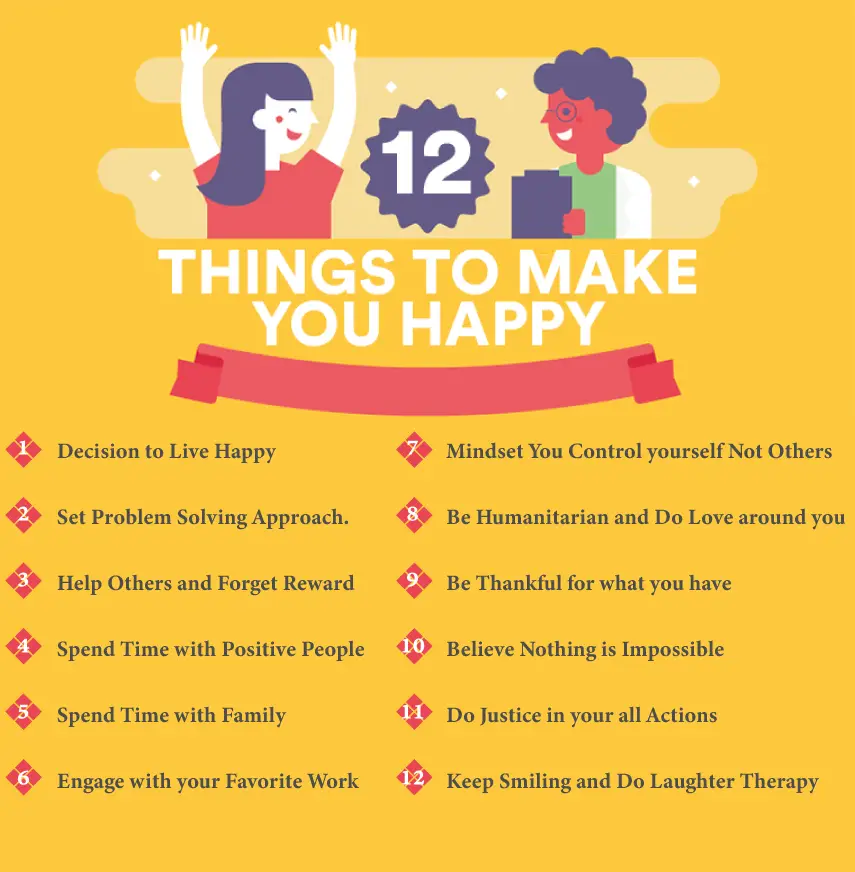
1- Decide to Live Happy
The first thing that you have to do is, “take Decision”. Decide that you have to live happy in this beautiful world. If you are unable to decide, no one can make you happy in your rest of life. So that is the most important step towards Happiness among 12 things to make you happy.

2- Set Problem Solving Approach
So once you have decided to live happy, the next step is to set your approach as problem solver. Quickly identify the problem and try to think about the possible solutions. May be you found 5 ways to solve the problem then you have to prioritize it which is most appropriate way to solve this problem. Then do it.

3- Help Others and Forget Reward
The third things to make you happy is helping others. It feels a great satisfaction when help poor or needy people. Help animals, help plants, help nature and every living and non living thing. But in return don’t expect good from other people rather expect sorrow. But you have to ignore it. Focus on what you have and ability to help other people. You will fell much better.

4- Spend Time with Positive People
That is magical thing if you have a good circle of positive people. If you don’t have these positive people find them. Keep away from those people that always talk about negative things. These kind of people also try to find negativity from positive work. Always make those friends who appreciates you. Who buck up your work and efforts. You will feel comfortable and ease in your life.

5- Spend Time with Family
This is one of the most important things to make you happy in your life. In this busy life, it’s quite difficult for someone to spare time for spending with family. But you must ask yourself like that: “For whom am I working ?” Who are my dearest ones ? and who are in my close relations? Who endured difficulties for me ?
Obviously my Family. Then you will find your family a vital organ of your body. Spare some time every day or in a week at least to sit with family. Make jolly environment and laugh at jokes. Go for family trips and spend memorable time with your family.

6- Engage with your Favorite Work
Choose your profession that most fit you or at least don’t leave those jobs you like the most. Do that job full time or part time whatever the case may be. Make sure you should not be free for doing nothing. Just keep engage you in your favorite jobs. That will make you happy along with work done.

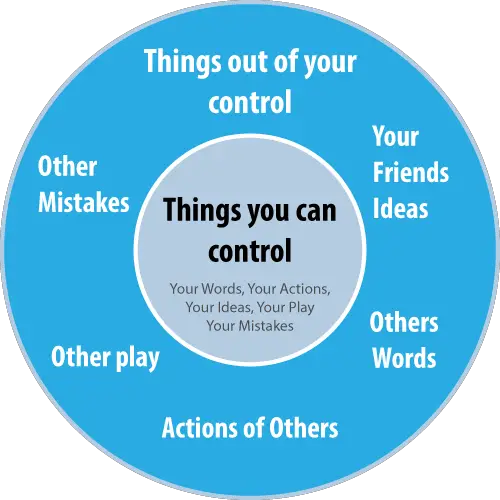
7- Mindset You Control Only yourself Not Others

Set your mind that you can only control yourself not the others. It will help you get rid of worries. How? When you will try to control other’s matters that might break your nerves. You will distract from your own life. Life is too short and time is our enemy. So try to control your own life to make it beautiful.
8- Be Humanitarian and Do Love around you
Try to find good human inside you. Be kind, affectionate and loving around you. Enjoy your life with loved ones. Try to think about beautiful life ahead. Be soft-centered and adoring. Don’t fall in aggression and violence. Then your life will be trouble free.

9- Be Thankful for what you have
Its human nature that we want more than we have. To want and to do efforts to get more than we have, is not a bad thing. But the bad thing is when we are not happy with what we have. Look around you deeply, you will find many people who have less than you have. Just think about it, if you were at that place ? So be thankful for what you have. This thing will change your life entirely and you will feel more happiness.

10- Believe Nothing is Impossible
Disappointment comes when you think most of the time that this work is impossible, that thing is also very difficult, no one help me to do my work, I can’t do anything and so on. This type of thinking leads to psychological problems. So avoid this type of thinking. Every thing is possible. Every problem has some sort of solution unless until you find it. Just find the ways to move on.

11- Do Justice in your all Actions
Sometimes we forget that whether all of my actions are according to the moral values and justice. It may be any of your actions can hurt others, can create problem for others, can ruin others life.
Obviously by doing this you will feel unhappy. To overcome this kind of problem, make an analysis on daily basis that whether you have done the right things all the day. If yes, you feel full satisfied with your life and sleep well. If not, then go for the solution what you did wrong.
Justice is not only limited to crimes and punishment, its all about keeping right thing at its right place. Giving the right thing who deserved it truly. Its all about our actions which we perform on daily basis. If our all actions are according to our moral values and laws, we are doing perfectly justice and vice versa.
Now this point will make your life very easy and peaceful. Your heart will be much satisfied than ever before.

12- Keep Smiling and Do Laughter Therapy
Smiling and laughter are magical things to make you happy. 138 studies data shows that smiling supports the facial feedback hypothesis’ central claim that facial feedback influences emotional experience.1
A smile spurs a chemical reaction in the brain, releasing certain hormones including dopamine and serotonin. “Dopamine increases our feelings of happiness. Serotonin release is associated with reduced stress. Low levels of serotonin are associated with depression and aggression,” says Dr. Gupta. “Low levels of dopamine are also associated with depression.”2 Smile shifts your mood good So make your life happy and stay blessed.

If you follow on these “12 THINGS TO MAKE YOU HAPPY” you will surely be happy in your life ahead.
12 THINGS TO MAKE YOU HAPPY
Want to read posts like this ?
What Makes a Powerful Country in the world

What Does Independence Really Mean






2 Comments